|
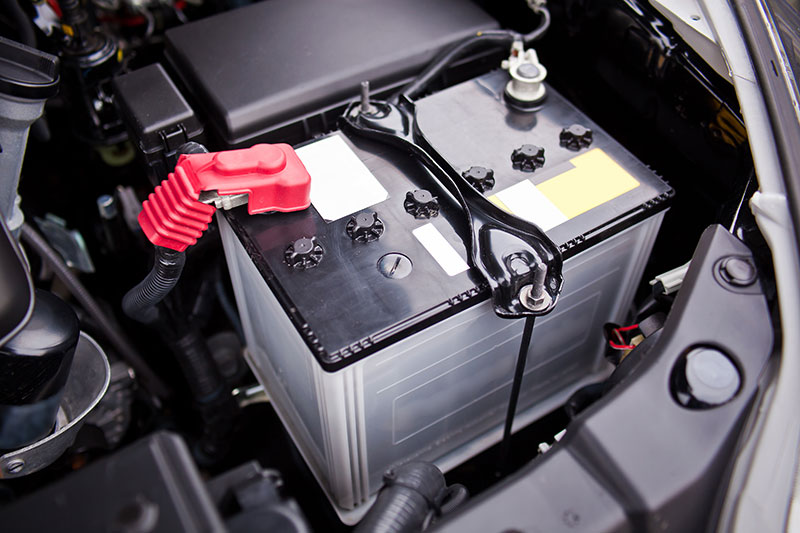
Your vehicle’s battery works quietly in the background every day, but colder weather has a way of exposing any weakness that has been building over time. A battery that seemed perfectly fine through the summer may suddenly struggle to crank the engine after the first truly cold night.
That is why fall is such a good time to have the battery and charging system checked. A few simple tests can identify a weakening battery, poor electrical connection, or charging problem before it leaves you stranded.
Why Cold Weather Is So Hard on Batteries
Most conventional vehicles use a 12-volt lead-acid battery to supply the high current needed by the starter motor. When you turn the key or press the start button, the battery delivers a substantial burst of electrical energy so the starter can rotate the engine fast enough for combustion to begin.
Cold temperatures make this job more difficult.
The chemical reactions inside a lead-acid battery slow as temperature drops, reducing the amount of power it can deliver. At the same time, cold engine oil becomes more resistant to flow, which can make the engine harder to turn.
The result is unfortunate timing: the battery has less available output at precisely the moment when the starter may need more of it.
CAA specifically identifies cold temperatures as a major challenge for automotive batteries and notes that a weak battery can become a liability once winter arrives.
What Cold Cranking Amps Really Mean
One of the most useful specifications on a battery is its Cold Cranking Amps, or CCA rating.
CCA represents the battery’s ability to supply current at -18°C while maintaining sufficient voltage. That is why replacement batteries commonly advertise ratings such as 500, 600, or 700 CCA.
For example, commercially available automotive batteries may be rated at 575 CCA, 615 CCA, or 725 CCA depending on vehicle application and battery size.
The correct battery is not simply the one with the highest number, however. It needs to meet the vehicle manufacturer’s requirements for physical group size, terminal orientation, capacity and starting performance.
Some newer vehicles also specify AGM, or absorbed glass mat, batteries because of their electrical demands or automatic stop-start systems. Installing the wrong battery type can affect performance and, in some vehicles, may interfere with charging-system operation.
Battery Age Matters
Automotive batteries do not last indefinitely.
CAA notes that batteries between approximately three and five years old become increasingly susceptible to failure.
Age alone does not automatically mean a battery needs replacement, but it does make testing more worthwhile.
Heat, vibration, repeated short trips, deep discharges and long periods of inactivity can all influence battery life. A vehicle that spends much of its time making five- or ten-minute trips may also have difficulty fully replenishing the electricity used during starting.
Modern vehicles can continue drawing small amounts of current after they are shut off as security systems, keyless-entry receivers, control modules and other electronics remain active. CAA notes that features such as cameras, keyless entry and automatic stop-start systems place additional demands on modern electrical systems.
A Battery Test Tells You Much More
Looking at a battery only tells part of the story.
A battery may appear perfectly normal while having significantly reduced capacity. Modern battery testers can evaluate its condition and determine whether it is still capable of delivering adequate starting power.
Testing becomes especially worthwhile if you notice symptoms such as slower-than-normal cranking, headlights that dim substantially during startup, intermittent electrical behaviour, or a vehicle that seems increasingly reluctant to start.
Transport Canada recommends checking the battery as part of winter preparation, along with cleaning its connections and inspecting the charging system.
Catching deterioration during a routine appointment is considerably more convenient than discovering it in the driveway on a freezing morning.
The Battery May Not Be the Problem
A no-start condition does not always mean the battery itself has failed.
The alternator is responsible for supplying electrical power while the engine is running and replenishing the battery after starting. If alternator output is too low, even a healthy battery may gradually become discharged.
Loose or corroded battery terminals can create another problem. High resistance at a connection can restrict current flow between the battery and starter, producing symptoms that resemble a weak battery.
Technicians may therefore inspect the complete starting and charging system rather than testing the battery in isolation.
That can include battery state of health, charging voltage, alternator output, cable condition, terminal corrosion and starter current draw.
If the battery warning light illuminates while driving, it can indicate a charging-system problem rather than simply a worn battery.
Short Trips Can Be Surprisingly Hard on Batteries
Starting the engine consumes a significant amount of electrical energy in a very short period.
Once the engine is running, the alternator has to replace that energy while simultaneously powering systems such as the blower motor, heated seats, rear-window defroster, headlights and windshield wipers.
Those loads tend to increase considerably during colder months.
If most trips are very short, the battery may repeatedly give up more energy during starting than it receives back before the vehicle is shut off again.
Over time, that can leave the battery chronically undercharged.
An occasional longer drive can help, but a battery that continually struggles should be tested rather than simply driven farther in the hope that the problem disappears.
Watch for Physical Warning Signs
A visual inspection can sometimes reveal trouble before testing even begins.
Look for corrosion around the battery terminals, loose connections, moisture around the case, cracking or an unusual bulge in the battery housing. CAA specifically recommends watching for corrosion, wetness and case deformation when checking a battery.
Battery hold-down hardware should also be secure. Excessive movement allows vibration to place unnecessary stress on internal components and electrical connections.
If anything looks unusual, have it inspected rather than attempting to repair a damaged battery.
Fall Is the Right Time to Check
There is no advantage to waiting until a weak battery actually fails.
A quick battery and charging-system inspection in the fall can give you a much clearer picture of whether your vehicle is prepared for colder starts ahead. If the battery is healthy, you gain some reassurance. If it is deteriorating, you have time to replace it conveniently rather than dealing with an unexpected no-start.
It is also an ideal opportunity to check other electrical basics such as the starter, alternator, battery terminals and charging performance.
A little attention now can make those cold morning starts considerably less stressful later.
Click the button below to book your service appointment and have your battery and charging system checked before winter arrives.
|


