|
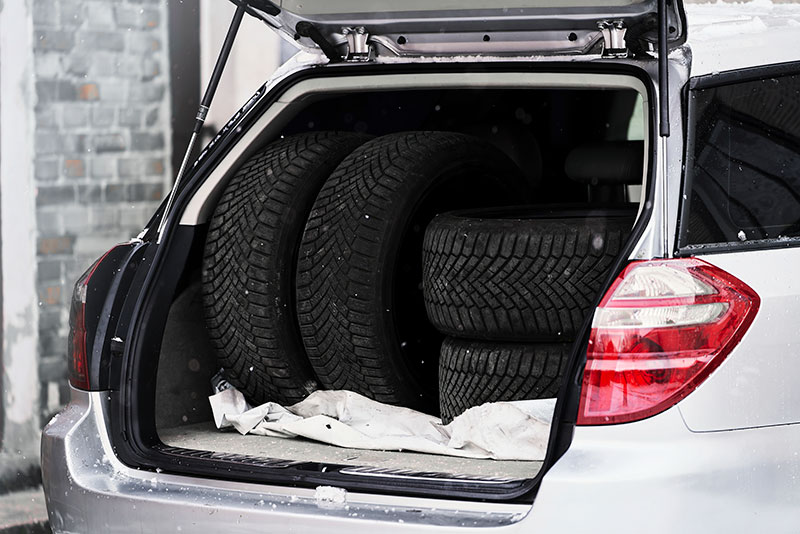
Proper tire storage can help protect your off-season set from damage and deterioration. Learn how and where to store your tires until you need to swap them again next season.
When it’s time to change your tires for the season, it’s important to find proper storage for the set that is coming off your vehicle. Tires can be affected by many factors while in storage, including sunlight, heat, moisture, and chemicals. Taking a little extra care when putting them away can help keep them in good condition and ready to go when their season rolls around again.
1. Inspection and Cleaning
Before putting your tires away, give them a quick inspection. Check the tread and sidewalls for cracks, cuts, bulges, uneven wear, or other visible signs of damage. Make note of anything concerning and have the tire professionally inspected before putting it back on next season.
While doing your inspection, you can also remove any stones or other debris that have become lodged in the tread. Then, clean the tires with mild soap and water to remove road grime and other residue they have accumulated. Allow everything to dry completely before moving on to storage.
2. Bag Them Up
Heavy-duty plastic bags, or bags specifically designed for tire storage, are a great way to keep dirt and moisture off your tires during storage while also limiting air exposure. Remove as much air as you reasonably can from each bag before sealing it up. Additionally, you can place your bagged tires inside tire totes to make them easier to carry, but bags are preferable to using only totes themselves.
3. Keep Them Cool, Dry, and Dark
Ideally, you should store your tires indoors, somewhere cool, dry, and protected from direct sunlight. Heat and UV exposure can contribute to the deterioration of rubber over time, while moisture can create problems for both tires and wheels. For example, a basement is generally a better option than a backyard shed. A garage may work well as long as it stays dry and protected from major temperature swings.
4. Positioning
The best way to position your tires while in storage depends on whether they are mounted on rims or not.
Tires without rims should generally be stored upright rather than stacked on top of one another or hung from hooks. Standing helps reduce the chances of distortion while they sit unused for months at a time. Occasionally rotating them is also a good idea.
Tires on rims can be stacked or hung using an appropriate tire rack or hook. Periodically changing their position can also help prevent one area from remaining under pressure for too long.
5. Check What’s Around
Finally, it’s important to consider what else is stored near your tires. Make sure that gasoline, oil, solvents, paints, lubricants, and other chemicals that could spill or give off vapours that may affect the rubber are kept well away from them. Additionally, do not store your tires near the furnace, sump pump, or generators, compressors, or electric motors, which may give off ozone and contribute to deterioration.
Not everyone has the ideal setup for tire storage. If an outdoor shed is your only option, for example, then do your best to make sure your tires stay dry and well positioned. Wherever and however you store your tires, a little care between seasons can help ensure that they are ready to get back on the road when you need them.
|


